Sports and surfing in Lombok, starting with Are Guling.
A guide to living seasons on the island: Are Guling bay and its two waves, the south-coast spots, the calendar and eight more ways to move, from snorkelling to Rinjani. For those who surf, for those travelling with someone who does, and for anyone considering a home here.
Are Guling · also spelled Aregulin or Air Guling
One bay, two waves.
Are Guling sits on the south coast of Lombok, west of Kuta. It is a bay open to the Indian Ocean, with a strip of sand, hills behind and a reef that shapes two waves: a right and a left. The Aregulin Estates villas take their name from this place.
The landscape is that of the island's south: short bays divided by headlands, clear water over the reef and little construction. At dawn the light comes in from the east; at the end of the day the bay faces west and the hills light up.
It is a reef spot and, in practice, one for intermediate and advanced surfers. Bottom, currents and size change with swell, wind and tide, and are best read with someone who knows the place. The usual window runs from October to April, when winds tend to be more favourable; the rest of the year it works depending on conditions.
The right
Fast and usually the main wave.
Usually the bay's reference wave: a fast right over reef that demands a committed paddle and reading of the section. With south or south-west swell and north or north-east wind is when it lines up best.
Level
Intermediate with reef experience · advanced
Who it suits
Those who want speed and wall, and know where to sit on the peak
The left
Hollower, more demanding.
The left breaks with more body and less margin for error. It asks for the right size, good positioning and respect for the bottom. Not the wave to try things on: the wave for when level and day line up.
Level
Advanced
Who it suits
Surfers used to reef who want a wave with more commitment
Are Guling at sunset · photograph
Choosing a session · 01
Read the forecast, not the clock
Swell direction and period, forecast wind and the day's tide decide which wave works and when. The good hour changes from day to day.
Choosing a session · 02
Ask someone who surfs it
A local guide or school reads the reef, the currents and the way in and out of the water better than any app. On reef, that reading is the session.
Choosing a session · 03
If it is not your day, there are other bays
If size or bottom do not match your level, the south coast offers sand-bottom alternatives and friendlier peaks. They are in the comparison below.
South Lombok spots
Five waves, five different experiences.
Kuta is the usual starting point. From there the bays spread east and west, each with its own bottom, level and way of getting there. Filter by level or read all five; the guide on the day always decides.
South coast · west of Kuta
Are Guling
IntermediateAdvanced
A fast right and a hollower left over reef in the same bay. Usual window October to April. The bay of Aregulin Estates.
Experience: reading the reef with a local guide and choosing a side by the day.
South coast · west of Kuta
Selong Belanak
BeginnerIntermediate
A wide, fine-sand beach on the south coast. The usual option for starting out or regaining confidence, with lessons from local schools depending on the day's conditions.
Experience: sand bottom, beach atmosphere and a day that works for families.
Bay east of Kuta
Gerupuk
BeginnerIntermediateAdvanced
A large bay with several peaks spread out, usually reached by boat from the village. There is no single level for the whole bay: each peak has its own, chosen with the boatman or the school.
Experience: a boat ride out, peak chosen by level and a whole morning in the water.
South coast · west of Kuta
Mawi
IntermediateAdvanced
A reference spot for experienced surfers on the south-west coast. The dry season is usually the more favourable. A powerful wave that rewards positioning and punishes hesitation.
Experience: a serious session, open landscape and few concessions.
South-west Lombok · day trip
Desert Point
Advanced
A long, technical left, among the best known in Indonesia, reserved for experts. It lies in the island's south-west: a trip in its own right, not a neighbouring bay or a short drive from Kuta.
Experience: a trip planned around a specific swell, with a guide.
Beyond surfing
Walks, snorkelling and rest
Hills overlooking the bays, clear water on calm days and coastal villages. The part of the trip for those who do not surf, or for the rest day.
Lombok has a dry season and a wet season, and each changes the character of the sea. What follows are tendencies, not guarantees: each week's swell and wind decide, and the transitions between seasons vary.
ABR — OCT
Dry season
More swell, more wind.
The dry months usually bring more ocean energy and also more wind. It is the time when spots such as Mawi tend to work best, and when it pays to get up early to find the sea in order.
Clear skies and good visibility for everything else. At Are Guling, conditions depend on the day.
NOV — MAR
Wet season
More clean days.
The rainy season usually offers more clean mornings, with the wind more favourable for the south coast. It is the window in which Are Guling tends to give its best days, provided swell arrives.
It rains, sometimes a lot, sometimes little; frequency and duration change from year to year.
Are GulingUsual window October to April, linked to north and north-east winds with south and south-west swell. Outside it, it can work; inside it, it may not. Nobody can fix the date of a good wave.
School, guide and session
How to choose well.
On the south coast there are local schools and guides with years in the water. Choosing well who to go with and which session to do is what turns a surf trip into a good surf trip.
01
Real level
Say which waves you have really surfed, not which ones you would like to. A good guide will take you where you can enjoy and progress, which is not always the famous spot.
02
The day's forecast
Wind, swell and tide are read together, every morning. Ask them to explain why that spot and that hour: you will learn to read the coast.
03
Local knowledge
Ways in and out of the water, currents, shallow reef zones. Information only someone who surfs the place often can give.
04
Priority and respect
Small peaks, local community and visitors. Respecting priority and the rhythm of the line-up is part of surfing here.
05
The reef
Booties if recommended, care at low tide and an exit planned before going in. The reef is what makes the wave; it deserves respect.
Beyond surfing
Eight ways to live Lombok.
Lombok is an island for moving: sea to the south, volcano to the north, rice fields inland. These eight activities are offered by independent local operators, guides and clubs on the island; they are not part of the villas or of any package. We group them by area and indicative intensity so you can organise the season at your own pace.
Sea
Snorkelling and diving, kitesurfing, sailing and paddle
South coast, south-east and the Gili islands to the north-west.
Photograph
Mountain and inland
Walks, Rinjani and cycling
South-coast hills, Tetebatu, Senaru and Sembalun, Bilebante.
Active life
Golf and yoga
North coast and Kuta.
Sea · Gili islands, north-west
Snorkelling and diving
Gili Trawangan, Meno and Air are three small islands off Lombok's north-west, and a separate trip from the south coast. Surface snorkelling is arranged with local boatmen; diving calls for a centre with proper training and certification. What you see depends on the day and visibility, and the reef is looked at, not touched.
On the south coast, the Merese hills look out over the bays and are the classic sunset walk. Inland, Tetebatu offers paths through rice fields, forest and waterfalls at the foot of Rinjani. These are walks, not trails fitted out for everyone: proper footwear, water and, in Tetebatu, a village guide.
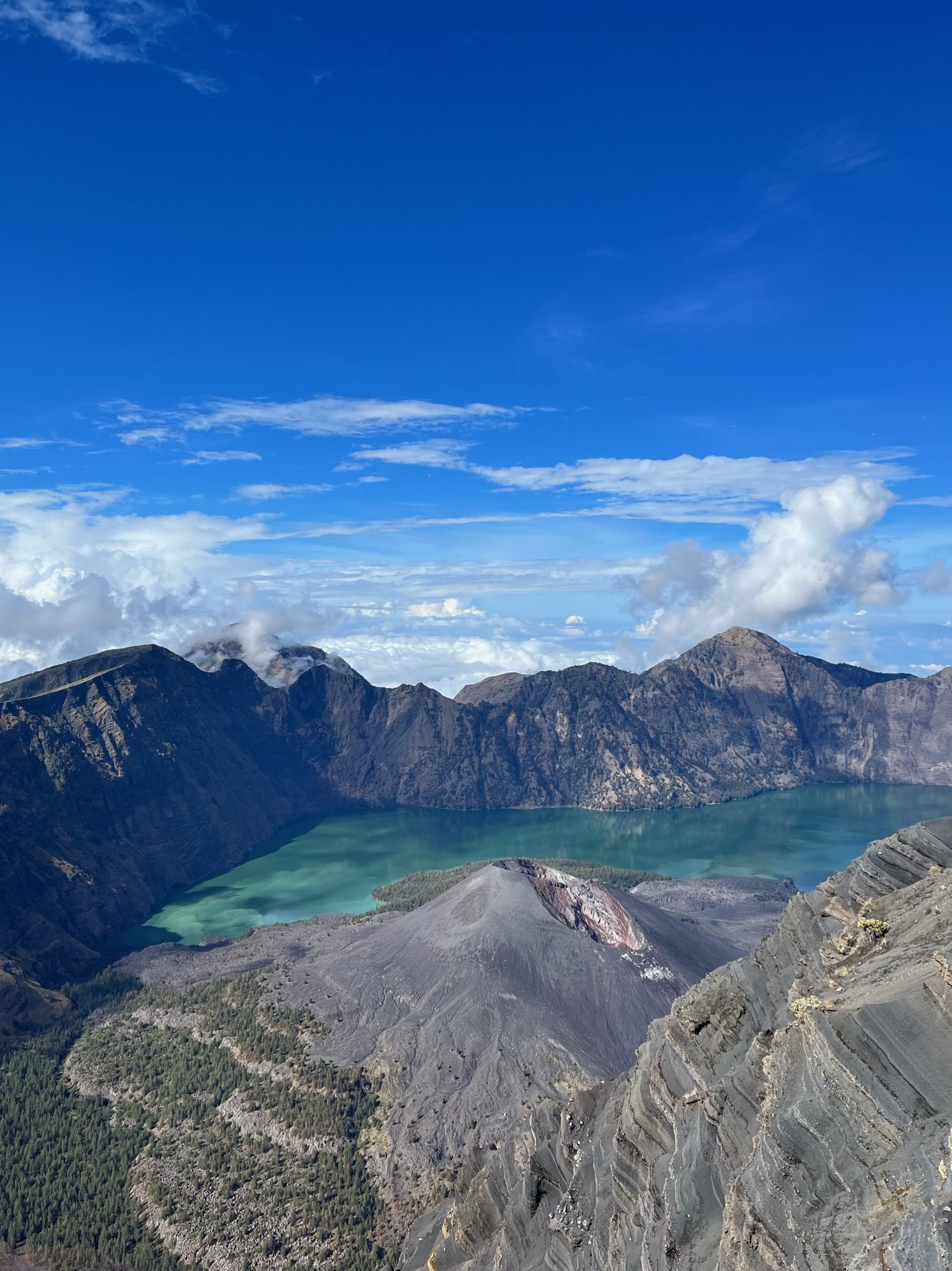
Rinjani is a mountain expedition, not a walk: several days, serious elevation and a night at altitude. It is climbed with a licensed guide from Senaru or Sembalun, with a permit and booking through the national park's system. The park applies seasonal closures and has announced changes for 2026: route status, calendar and conditions are confirmed with the park before planning.
Bilebante, in Central Lombok, is explored by bicycle along paths between rice fields and villages, with routes adjusted to each group's level. Itinerary and conditions are agreed with the village's local contact. Leaving early because of the heat, sharing the way with rural traffic and stopping at local workshops and kitchens is part of the plan.
Kaliantan lagoon, in the island's south-east, hosts a kitesurf school and centre teaching by level, from the first kite to independent sessions. The instructor decides each day according to wind and tide. It is a different area from the Kuta south coast and is organised as its own outing.
Sira Beach Golf & Country Club, on Lombok's north coast, is an 18-hole course by the sea. It is far from the south coast: plan it as a separate trip, with the tee time confirmed directly with the club and, if you like, combined with a night in the north or a visit to the Gili islands.
Kuta has a local offer of yoga and mobility, in studios and in programmes that combine practice with surfing. For those who surf it is a way to recover and prepare the body; for those who do not, a rhythm of their own, morning or evening. These are external operators, unrelated to Three Islands Group.
On the south coast, a local operator runs sailing trips and paddle-board sessions in calm water. They are scheduled with the operator according to sea, wind and the group's level; on calm days they are the gentlest way to be on the water. They are not practised over the Are Guling reef.
Surf or paddle in the morning, a sandy beach, yoga or a walk up Merese at sunset. The plan that does not need a car all day.
How to combine it · 02
North and Gili: a separate trip
Snorkelling, diving or golf are planned as their own outing to the north, with a night away if you want the whole day.
How to combine it · 03
Inland and Rinjani: ahead of time
Tetebatu and Bilebante make a day inland; Rinjani is an expedition booked well ahead and confirmed with the park.
Render
A balanced stay
Surf for those who surf, Lombok for everyone.
The eleven Aregulin Estates villas look onto Are Guling bay. For those who surf, that means reading the sea from home and deciding the session; for everyone else, a quiet base from which to discover the south coast and the island.
Morning surf at Are Guling or a neighbouring bay, depending on the forecast
Afternoon on a sandy beach, a walk in the hills or the market in Kuta
Rest days: snorkelling in calm water, Sasak culture, Rinjani on the horizon
It is not the usual place for a first lesson: it is reef and its waves call for intermediate or advanced level. To start, local schools usually work on sandy beaches such as Selong Belanak, depending on the day's conditions.
When is the best time?
For Are Guling, the usual window is October to April, when winds tend to be more favourable. For other spots on the coast, such as Mawi, the dry season usually works better. In both cases the week's forecast decides.
Is there an in-house surf school or guide at Aregulin Estates?
No. Independent local schools and guides operate on the south coast; we help you choose among them, but we do not offer surf services of our own.
Are the activities included with the villas?
No. Snorkelling, diving, trekking, cycling, kitesurfing, golf, yoga and sailing are offered by independent local operators, guides and clubs. This guide explains what there is and how to organise it; bookings and conditions are agreed with each operator.
Can everything be done from the south coast in a day?
Better not to try. The south coast lets you combine a sea session with rest on the same day; the Gili islands, north-coast golf, Tetebatu or Rinjani are planned as separate trips, some with a night away.
What if I don't surf?
Sandy beaches, walks in the hills, snorkelling on calm days, the markets and villages of Kuta and the Sasak cultural setting. The location page gathers the surroundings and the history page, the island's culture.